
Gas Station Tax Deductions & Tax Planning in California: 2026 Guide for Owners
 Shruti Raja
on
August 13, 2026
Shruti Raja
on
August 13, 2026
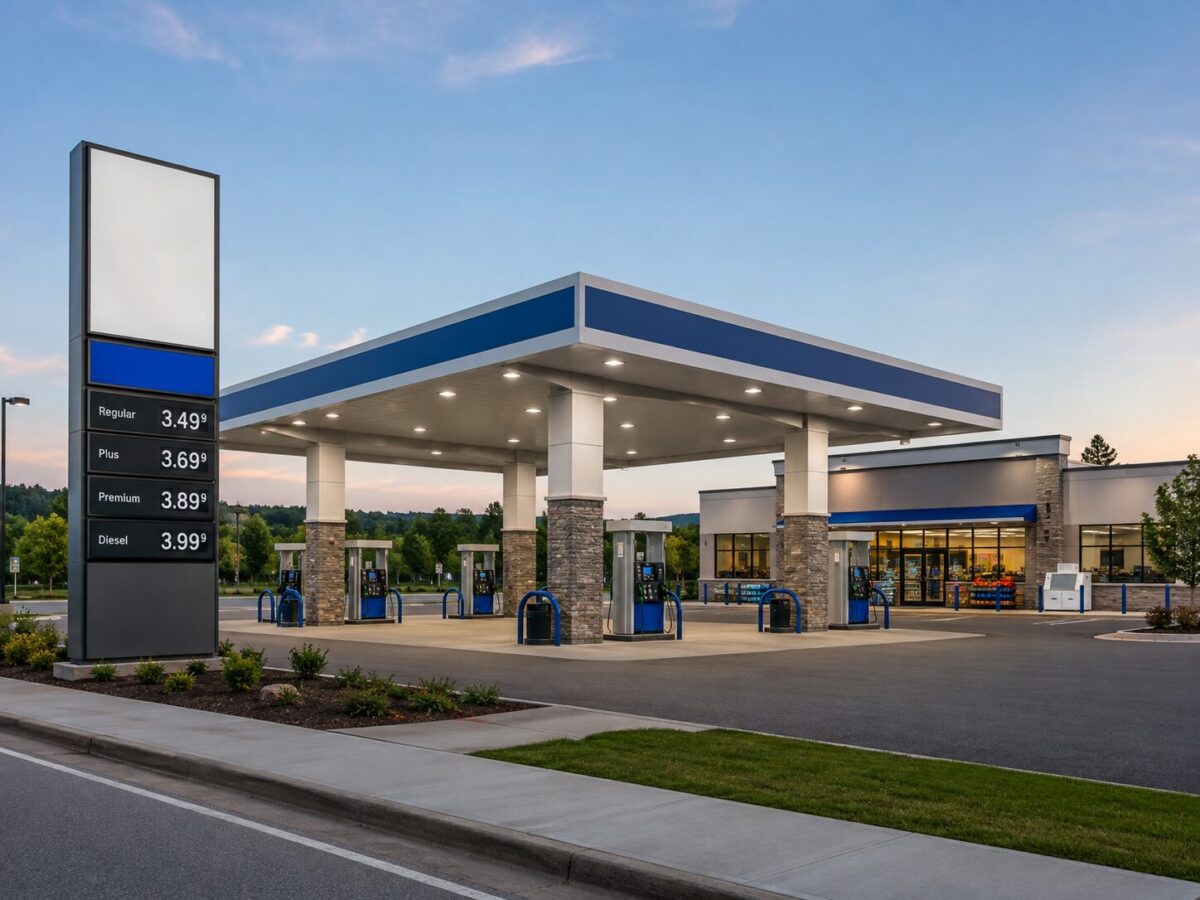
Owning a gas station can produce millions of dollars of annual sales without producing anything close to millions of dollars of profit.
That distinction matters for taxes.
Gas station owners deal with an unusually complicated mix of:
Fuel inventory and high cost of goods sold
Federal and California income taxes
Fuel excise taxes
Sales tax
Convenience-store inventory
Credit-card processing fees
Cash transactions
Employee payroll
Equipment and building depreciation
California LLC, S corporation, or corporate taxes
Large capital investments
The eventual purchase or sale of the station
A tax return prepared only from a year-end profit-and-loss statement can therefore miss important planning opportunities—and sometimes important compliance issues.
Below are some of the biggest tax issues California gas station owners should be reviewing in 2026.
Why Gas Station Taxes Are Different
One reason gas station taxes become confusing is that several tax agencies are involved.
The IRS administers federal income, employment, depreciation and related federal tax rules. The California Franchise Tax Board (FTB) administers California income and franchise taxes. Fuel taxes, sales and use taxes, seller’s permits, and many gas-station-specific California tax requirements generally fall under the California Department of Tax and Fee Administration (CDTFA).
That distinction is important. A gas station can be completely current with its income-tax filings while still having an issue involving sales tax, fuel reporting, payroll, or another tax account.
For example, CDTFA states that gasoline sales are generally taxable unless a specific exemption applies, and the displayed pump price generally includes applicable federal and state excise taxes as well as applicable sales taxes.
As of July 1, 2026, CDTFA lists the following taxes included in the retail price of motor fuel:
Federal gasoline tax: $0.184 per gallon
California gasoline fuel tax: $0.634 per gallon
Federal diesel tax: $0.244 per gallon
California diesel fuel tax: $0.482 per gallon
Sales tax depends on the retail location and applicable fuel rules.
For the July 2026 through June 2027 period, CDTFA also lists fuel sales-tax prepayment rates of 8.0 cents per gallon for gasoline and 42.5 cents per gallon for diesel. These prepayment rates can change, so owners should not reuse a prior-year rate without checking.
1. High Sales Do Not Mean High Taxable Profit
This is one of the biggest issues when analyzing a gas station.
A station might report $5 million, $8 million, or considerably more in annual revenue while operating on relatively narrow margins. A large part of those receipts may ultimately go toward fuel purchases and other operating costs.
For federal income-tax purposes, a business generally deducts ordinary and necessary operating expenses unless an expenditure must instead be capitalized or included in cost of goods sold. The IRS specifically identifies categories including payroll, insurance, utilities, interest, professional fees, repairs, taxes and depreciation as common business expenses.
For gas stations, the bookkeeping distinction between sales, inventory, cost of goods sold and operating expenses becomes particularly important.
A tax return should not simply treat every payment leaving the business bank account as a current deduction.
2. California’s LLC Fee Can Hurt High-Revenue, Low-Margin Gas Stations
This is a tax many California gas station owners do not expect.
An LLC that is not taxed as a corporation may owe California’s annual $800 tax plus an additional LLC fee once total California income reaches $250,000.
The current fee schedule is:
| California Total Income | LLC Fee |
|---|---|
| $250,000–$499,999 | $900 |
| $500,000–$999,999 | $2,500 |
| $1,000,000–$4,999,999 | $6,000 |
| $5,000,000 or more | $11,790 |
The critical issue for a gas station is how California defines total income for this purpose.
For the LLC fee, FTB defines total income generally as gross income plus cost of goods sold, rather than net profit.
That means a gas station can have relatively modest bottom-line income and still fall into the $11,790 maximum LLC-fee bracket because of its fuel sales volume.
This is one reason entity selection for a California gas station should not be based solely on liability protection or the federal tax result.
3. Gas Station Depreciation Can Be Much More Valuable Than Owners Realize
Depreciation deserves particular attention when buying, renovating or expanding a station.
A gas station building may qualify as 15-year property federally
The IRS classifies qualifying retail motor fuels outlets as 15-year property under the federal Modified Accelerated Cost Recovery System rather than automatically treating the property like ordinary 39-year nonresidential real estate.
But this treatment should not be assumed for every property.
IRS Publication 946 provides that real property is a retail motor fuels outlet if it is used to a substantial extent in retail petroleum marketing and satisfies at least one of these tests:
The property is not larger than 1,400 square feet;
50% or more of the gross revenues generated from the property are from petroleum sales; or
50% or more of the floor space is devoted to petroleum marketing sales.
That classification can have a substantial tax effect.
Federal 100% bonus depreciation is back
Current federal law provides 100% additional first-year depreciation for eligible qualified property acquired after January 19, 2025, subject to the requirements of IRC §168(k).
Because qualified property with a recovery period of 20 years or less can potentially fall within the bonus-depreciation rules, determining whether a station or particular station assets meet the applicable classifications can be highly significant.
However, this does not mean that every dollar spent to buy a gas station is immediately deductible. Land is not depreciable, purchase-price allocation matters, and assets must separately satisfy the relevant depreciation rules.
2026 Section 179 limits are also much higher federally
For tax years beginning in 2026, the federal §179 deduction limit is $2,560,000. The deduction begins phasing out when qualifying property placed in service exceeds $4,090,000.
These limits can be relevant when stations purchase qualifying equipment such as certain machinery, business equipment or other eligible assets.
California is very different
Gas station owners should not copy the federal depreciation schedule into the California return.
California expressly does not conform to the new federal 100% bonus-depreciation provision.
California’s current §179 rules are also significantly less generous. FTB’s current guidance uses a $25,000 maximum §179 deduction, reduced when qualifying property placed in service exceeds $200,000. California does not conform to the higher federal limits.
For a station making significant capital improvements, the federal and California depreciation schedules can therefore diverge dramatically.
That difference also matters years later when the station is sold.
4. Cost Segregation May Be Worth Reviewing—But It Needs to Be Done Correctly
A gas station purchase may include much more than land and one building.
Depending on the transaction and facts, there may be:
Fuel dispensing equipment
Tanks and related equipment
Canopies
Signage
Security equipment
Refrigeration
Shelving and store fixtures
Computer and POS systems
Paving and other site improvements
Building components
Furniture and equipment
Different assets can have different tax recovery periods.
The objective is not simply to classify as much property as possible into the shortest life. The classifications must be supportable under the tax rules.
This is especially important in 2026 because accelerated federal depreciation can make the timing difference significant, while California may still require a much slower deduction.
5. Gas Station Bookkeeping Should Reconcile More Than the Bank Account
For a typical service business, reviewing revenue against bank deposits may identify many bookkeeping problems.
For a gas station, that is only the beginning.
The IRS specifically identifies cash-register tapes, deposit information, receipt books and invoices as business records that may support income and expenses. Its examination guidance also contemplates testing sales records, gross-profit ratios and bank deposits when examining businesses.
A strong gas station monthly close should generally make it possible to reconcile items such as:
POS sales
Credit- and debit-card settlements
Cash receipts and deposits
Fuel sales
Convenience-store sales
Fuel purchases
Beginning and ending inventory
Merchant processing fees
Payroll
Sales-tax liabilities
Owner draws or distributions
Capital purchases
The exact reconciliation depends on the station’s systems and operations, but unexplained differences should be investigated rather than simply posted to miscellaneous income or expense.
6. Cash Transactions Create Additional Reporting Risk
Gas stations are often associated with cash receipts, but an important federal rule applies when a business receives a particularly large cash payment.
A trade or business that receives more than $10,000 in cash in one transaction or related transactions generally must file Form 8300. The form generally must be filed within 15 days after the reportable cash is received.
The definition of cash is more nuanced than simply currency. Certain cashier’s checks, money orders, bank drafts and traveler’s checks can also be treated as cash depending on the transaction and amount.
This rule may arise less frequently in routine fuel sales than in transactions involving the sale of equipment, property, a business interest or another large transaction, but gas station owners should know it exists.
7. Employee Versus Independent Contractor Classification Matters
Gas stations commonly employ cashiers, managers, stock personnel and other workers.
Calling a worker a contractor or paying someone on Form 1099 does not automatically make that person an independent contractor.
The IRS looks at the underlying relationship, including behavioral control, financial control and the type of relationship between the parties. Misclassification can create employment-tax exposure.
Owners should be especially careful with workers who:
Work recurring shifts controlled by the station
Perform the station’s regular operating functions
Are supervised by station management
Have little independent business activity
Do not control how their work is performed
Worker classification is fact-specific and should be evaluated based on the actual relationship.
8. An S Corporation Can Help in Some Cases—but It Is Not Automatically the Best Gas Station Structure
A common question is:
“Should I put my gas station in an S corporation?”
There is no universal answer.
An S corporation can create payroll and self-employment-tax planning opportunities in the right situation, but several other tax consequences must be modeled.
California S corporations are generally subject to a 1.5% tax on California-source net income and an $800 minimum franchise tax, subject to the first-year minimum-tax rules.
Additionally, an owner who provides services to an S corporation cannot simply avoid payroll by taking all profits as distributions. The IRS requires shareholder-employees to receive reasonable compensation for services performed and can reclassify distributions as wages when appropriate.
For gas station owners, entity analysis should compare at least:
Federal income tax
Payroll/self-employment tax
California entity-level tax
California LLC fee
Owner compensation
Qualified business income deduction
PTE elective tax eligibility
Financing and ownership structure
Exit strategy
Changing the entity without modeling all of these items can solve one tax problem while creating another.
9. The Federal QBI Deduction Is Permanent in 2026—but California Does Not Follow It
The federal Qualified Business Income deduction under IRC §199A was made permanent.
Eligible owners of sole proprietorships and certain partnerships and S corporations may potentially deduct up to 20% of qualified business income, subject to applicable limitations.
For 2026, the IRS lists the §199A threshold at $403,500 for married filing jointly, with the relevant phase-in range extending to $553,500. Different thresholds apply to other filing statuses.
A profitable gas station may potentially qualify, but the deduction should not simply be calculated as “20% of profit.” At higher income levels, W-2 wages, qualified property and other limitations can affect the deduction.
California, however, does not conform to the federal §199A QBI deduction.
This is another reason a federal taxable-income projection alone is insufficient for a California owner.
10. California’s PTE Elective Tax Is Still Available in 2026
Owners of qualifying S corporations and partnerships should also consider California’s Pass-Through Entity elective tax.
California has extended the PTE elective tax for taxable years beginning in 2026 through 2030. The elective tax is calculated at 9.3% of qualified net income for consenting qualified taxpayers.
For calendar-year entities, an important payment is generally due by June 15. The required payment is the greater of:
$1,000, or
50% of the prior-year PTE elective tax
Beginning in 2026, missing or underpaying that June 15 amount no longer automatically eliminates the ability to make the election. Instead, if the other requirements are satisfied, the owner’s available credit can be reduced by 12.5% of the owner’s pro rata share of the unpaid required amount.
For profitable gas station owners, this should be reviewed as part of the annual tax projection rather than after the year has already ended.
11. Estimated Taxes Are a Common Source of Surprise
A gas station owner can have a profitable business and still discover a substantial tax balance when the return is prepared.
Federal estimated-tax rules generally require taxpayers to prepay enough tax through withholding and estimates to cover the smaller of:
90% of the current year’s tax, or
100% of the prior year’s tax
For certain higher-income taxpayers, the prior-year percentage becomes 110%.
California has its own rules.
For 2026, California individuals generally pay estimated taxes using a 30% / 40% / 0% / 30% installment schedule rather than four equal federal installments. California also restricts the prior-year safe harbor when current-year California AGI reaches $1 million, or $500,000 for married/RDP filing separately.
An owner who is having an unusually strong year should therefore update projections before year-end rather than relying blindly on last year’s estimates.
12. Buying a Gas Station? Purchase-Price Allocation Can Affect Years of Taxes
When someone buys a gas station, the purchase price usually does not represent one tax asset.
The transaction may include:
Land
Building
Equipment
Fuel inventory
Store inventory
Furniture and fixtures
Franchise or contractual rights
Other intangible assets
Goodwill
For an applicable asset acquisition, federal tax law generally requires the buyer and seller to allocate consideration among the transferred assets using the residual method.
This matters because different assets have different tax treatment.
For the buyer, allocation affects future depreciation and amortization.
For the seller, allocation can determine whether gain is capital gain, ordinary income, depreciation recapture, or another character.
A purchase agreement that simply says “gas station – $4 million” without meaningful tax allocation deserves attention before the transaction closes, not after.
13. Selling a Gas Station Can Produce Several Different Types of Taxable Gain
For federal tax purposes, selling a business for one lump sum is generally treated as the sale of its individual assets rather than one single asset.
That means the seller may have different tax consequences for:
Inventory
Equipment
Building
Land
Goodwill
Other intangible property
Prior depreciation can also cause part of the gain on depreciable property to be treated under depreciation-recapture rules rather than simply receiving capital-gain treatment.
California creates another wrinkle: California basis can differ from federal basis because depreciation deductions frequently differ between the two systems.
And California generally does not provide a special lower tax rate for long-term capital gains; capital gains are taxed under California’s ordinary personal income-tax rates.
For an owner considering a sale, tax modeling should ideally start while there is still time to negotiate the transaction structure and purchase-price allocation.
14. Common Gas Station Tax Deductions to Review
There is no special IRS list giving every gas station owner the same deductions.
Instead, expenses generally must satisfy the applicable rules for ordinary and necessary business expenses, capitalization, inventory and substantiation.
Depending on the facts, categories worth reviewing can include:
Employee wages
Employer payroll taxes
Workers’ compensation and other business insurance
Utilities
Rent
Business loan interest
Accounting and legal fees
Repairs and maintenance
Advertising
Business licenses and applicable taxes or fees
Depreciation on qualifying equipment and property
Supplies
Merchant and payment-processing costs where properly characterized
Other ordinary and necessary station operating expenses
But repairs are not the same as improvements, and inventory purchases are not necessarily treated the same way as ordinary operating expenses.
The correct treatment depends on what was purchased and why.
15. Tax Issues That Should Get a Gas Station Owner’s Attention
These issues do not automatically mean a return is wrong or that an audit will occur. They are simply areas where records and tax treatment deserve additional scrutiny:
Large differences between POS reports and reported gross receipts
Bank deposits that cannot be reconciled to sales and other receipts
Fuel or store inventory balances that are unsupported
Personal expenses being run through the business
Significant workers reported as contractors despite employee-like working arrangements
An S corporation owner working full time but receiving little or no W-2 compensation
Using the federal depreciation schedule for California without adjustments
Failing to distinguish taxable and nontaxable convenience-store sales
Missing California LLC fees because the business had low net profit
Missing estimated-tax or PTE deadlines
Large capital purchases expensed without determining whether capitalization is required
Buyer and seller using inconsistent purchase-price allocations
Poor records supporting depreciation basis from an older station acquisition
Good bookkeeping is not only about producing a tax return. It gives the owner enough information to identify these issues before they become expensive.
2026 Gas Station Tax Planning Checklist
A California gas station owner should consider reviewing the following before year-end:
Reconcile POS receipts to cash and merchant deposits
Reconcile fuel and convenience-store inventory
Confirm sales-tax treatment of fuel and store products
Review federal versus California depreciation schedules
Identify significant equipment and improvement purchases
Determine whether retail motor fuels outlet depreciation treatment applies
Review potential federal bonus depreciation and §179 deductions
Review California §179 limitations separately
Confirm employee versus contractor classifications
Review S corporation shareholder compensation where applicable
Calculate the California LLC fee where applicable
Review federal and California estimated-tax payments
Evaluate California PTE elective tax if eligible
Review the federal §199A/QBI deduction
Confirm Form 8300 procedures for applicable large cash transactions
Update fixed-asset schedules
Start tax planning before buying or selling a station
Looking for a CPA Who Understands Gas Station Taxes?
Gas station tax planning involves more than entering numbers from a profit-and-loss statement onto a tax return.
For California owners, some of the largest opportunities—and risks—can arise from:
depreciation, entity structure, California LLC fees, inventory accounting, payroll, estimated taxes, PTE tax planning, purchase-price allocation and the eventual sale of the business.
A proactive tax review can help determine whether your current structure and tax strategy still make sense before the year is over.
Shruti CPA works with California business owners on proactive tax planning, projections, entity structure and tax compliance.
If you own, are purchasing, or are preparing to sell a gas station, consider having the tax structure reviewed before major transactions are finalized.
FAQs
A gas station can generally deduct ordinary and necessary business expenses that are properly substantiated and are not required to be capitalized or included in inventory or cost of goods sold. Common categories can include wages, insurance, utilities, interest, professional fees, repairs, taxes and depreciation. The treatment of large equipment purchases, improvements and inventory is different and should be reviewed separately.
Potentially. Federal tax rules classify qualifying retail motor fuels outlets as 15-year property. The property must satisfy the applicable IRS requirements, including one of the size, petroleum-revenue or petroleum-floor-space tests. It should not be assumed that every convenience store or gas station property qualifies.
Federal law restored permanent 100% bonus depreciation for eligible qualified property acquired after January 19, 2025. Whether a particular gas station asset qualifies depends on its classification and the requirements of IRC §168(k).
No. FTB specifically states that California does not conform to the federal 100% bonus-depreciation provision. Separate federal and California depreciation calculations may therefore be necessary.
Effective July 1, 2026, CDTFA lists the California state fuel tax at 63.4 cents per gallon for gasoline and 48.2 cents per gallon for diesel. Other taxes, including federal excise tax and applicable sales tax, also affect the retail price.
Neither is automatically better. A California LLC can face an $800 annual tax plus a gross-income-based LLC fee, while a California S corporation generally pays a 1.5% tax on California-source income and an $800 minimum franchise tax. Federal payroll, QBI, owner compensation, PTE tax and exit considerations should also be modeled before changing entities.
A gas station, like other trades or businesses, generally must file Form 8300 if it receives more than $10,000 in cash from the same payer in a single transaction or related transactions and the other reporting requirements are met. The filing is generally due within 15 days after receipt of the reportable cash.
📅 Book a consultation today to prepare for the 2026 tax year with confidence.
Book A Free Call
Disclaimer: This guide is for informational purposes only and does not constitute legal or tax advice. Always consult a qualified tax professional for advice specific to your situation.
- Category: CPA & Tax Advice
- Tag: CPA in the Bay Area